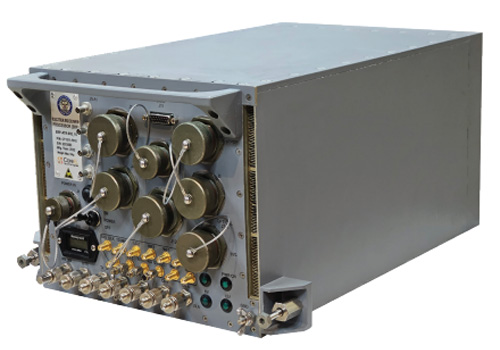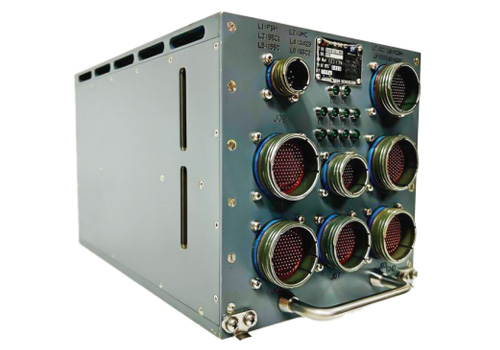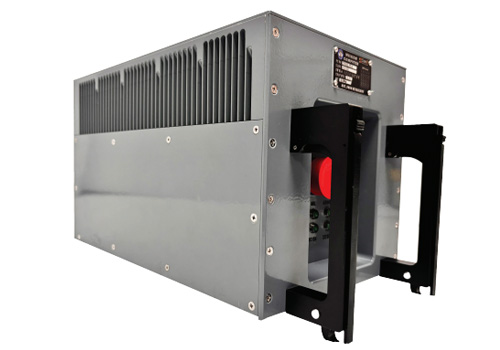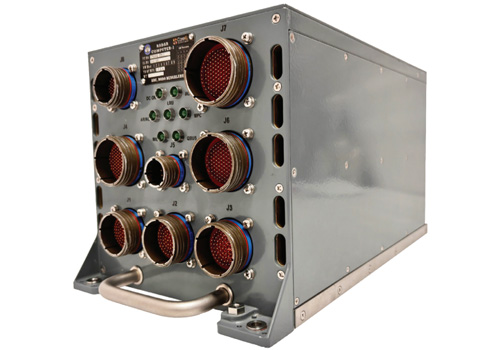

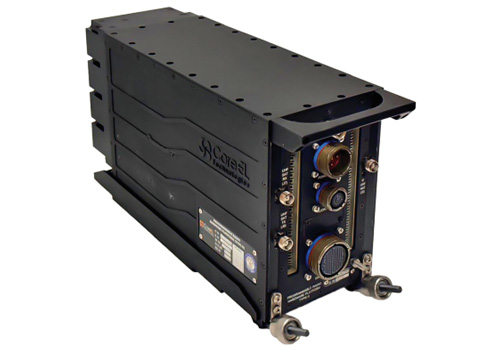
Software Defined Radio (SDR) is an airborne SoFT qualified system. It is available in two options Type-I with V/UHF and L-band; Type-II with V/UHF and UHF SATCOM band. SDRis a ½ ATR short form-factor system and mounted on independent ARINC trays.
Key Features:
- Clear HW separation for RED and BLACK
- RF Frequency
- Type-I
- V/UHF Band
- L Band
- Type-II
- V/UHF Band
- UHF SATCOM
- Type-I
- RF Output power
- V/UHF Band: 25 Watt (High); 04 Watt (Low)
- L Band : 50 Watt (High); 10 Watt (Low)
- UHF Satcom Band: 50 Watt (High); 10 Watt (Low)
- Power consumption :
- < 635W with 2 channels Tx
- < 230W in Rx only mode
- Weight ~12.5kg
- Audio Interface
- Single Ended and Differential Ended Dual Channel Audio with PTT
- Standard Interfaces
- MIL1553B, ARINC429, PPS, GPS, UART, Blanking, GPIOs, Ethernet
Waveforms:
- Digital Waveforms
- Wideband (2.5MHz) and Narrow Band (25kHz, 250kHz)
- LPI-LPD
- Legacy Waveforms
- AM, FM
- Clear and Secure Modes
- Networking
- Topology : PTP, PTMP, Mesh
- Order: 40 Nodes and Scalable
- Multi-Hop, Multi-Net
- Traffic
- Voice: Analog, Digital 2.4kbps to 8kbps, VoIP Support
- Data: IP Data L3 Upto 2Mbps
- Preset Channels: 100 per waveform
- UHF Satcom DAMA Waveform
Robustness
- Synchronization: Autonomous, masterless, No reliance on GPS or any external signal
- COMSEC: AES256
- TRANSEC: Resilient Robust FH Modes. Up to 500 Hops/s